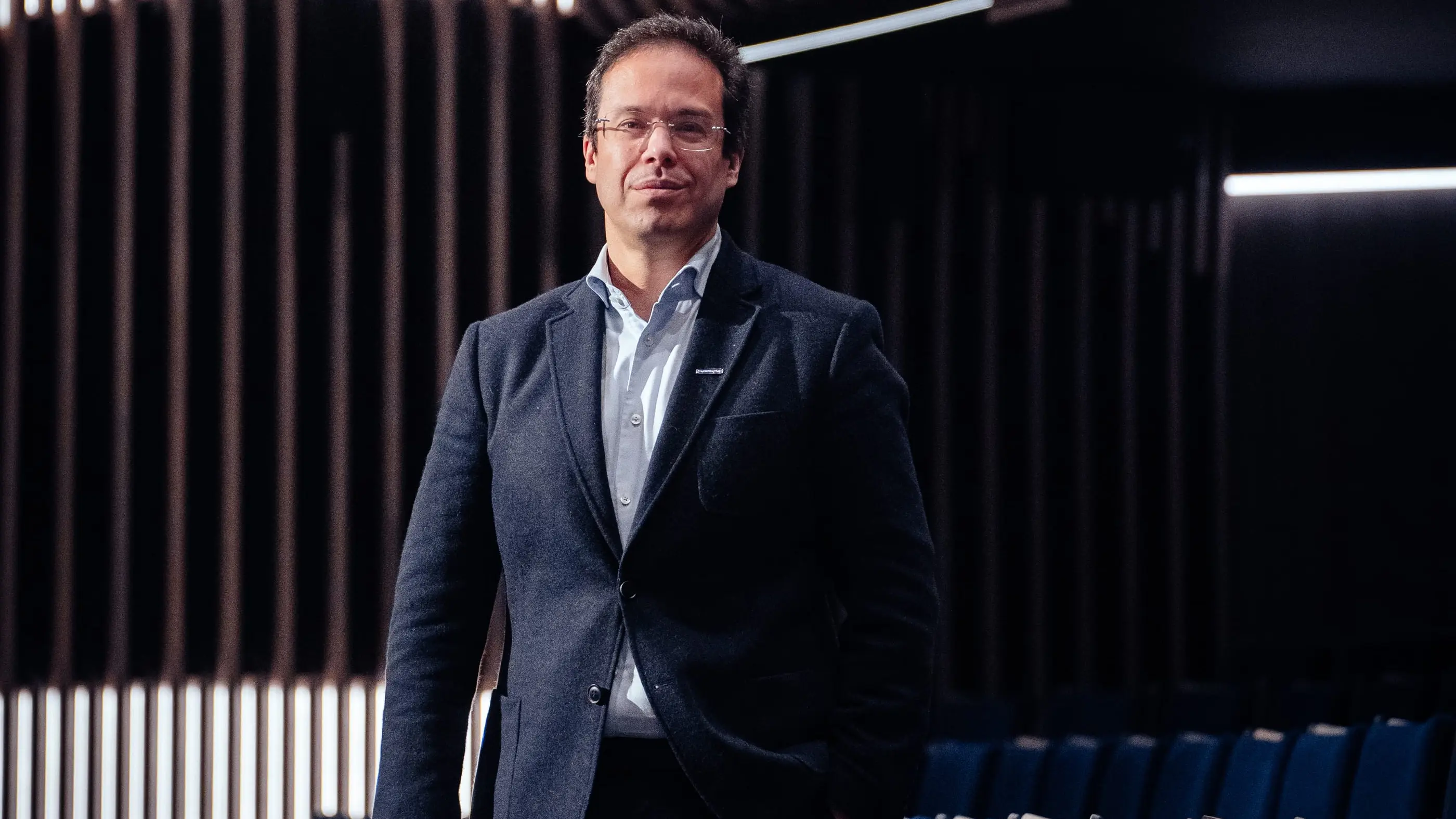
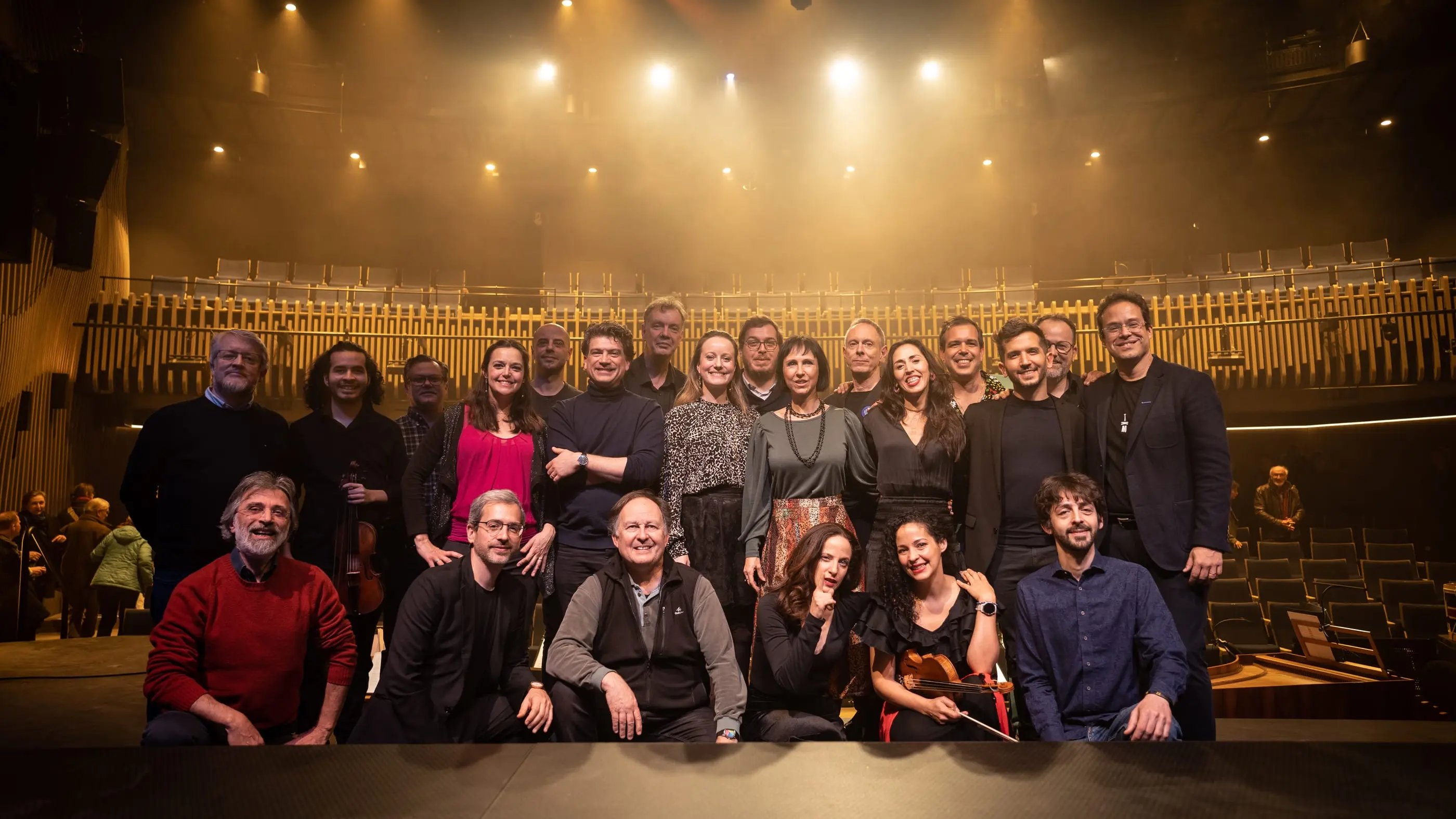
La Cité Bleue presents its 2026–2027 Season, an ambitious and deeply grounded program under the artistic direction of Leonardo García-Alarcón. Concerts, operas, dance, musical theater, and cross-disciplinary projects make up a season conceived as a journey where aesthetics, eras, and cultures meet and transform, under the banner of the abrazo and the Baroque spirit.
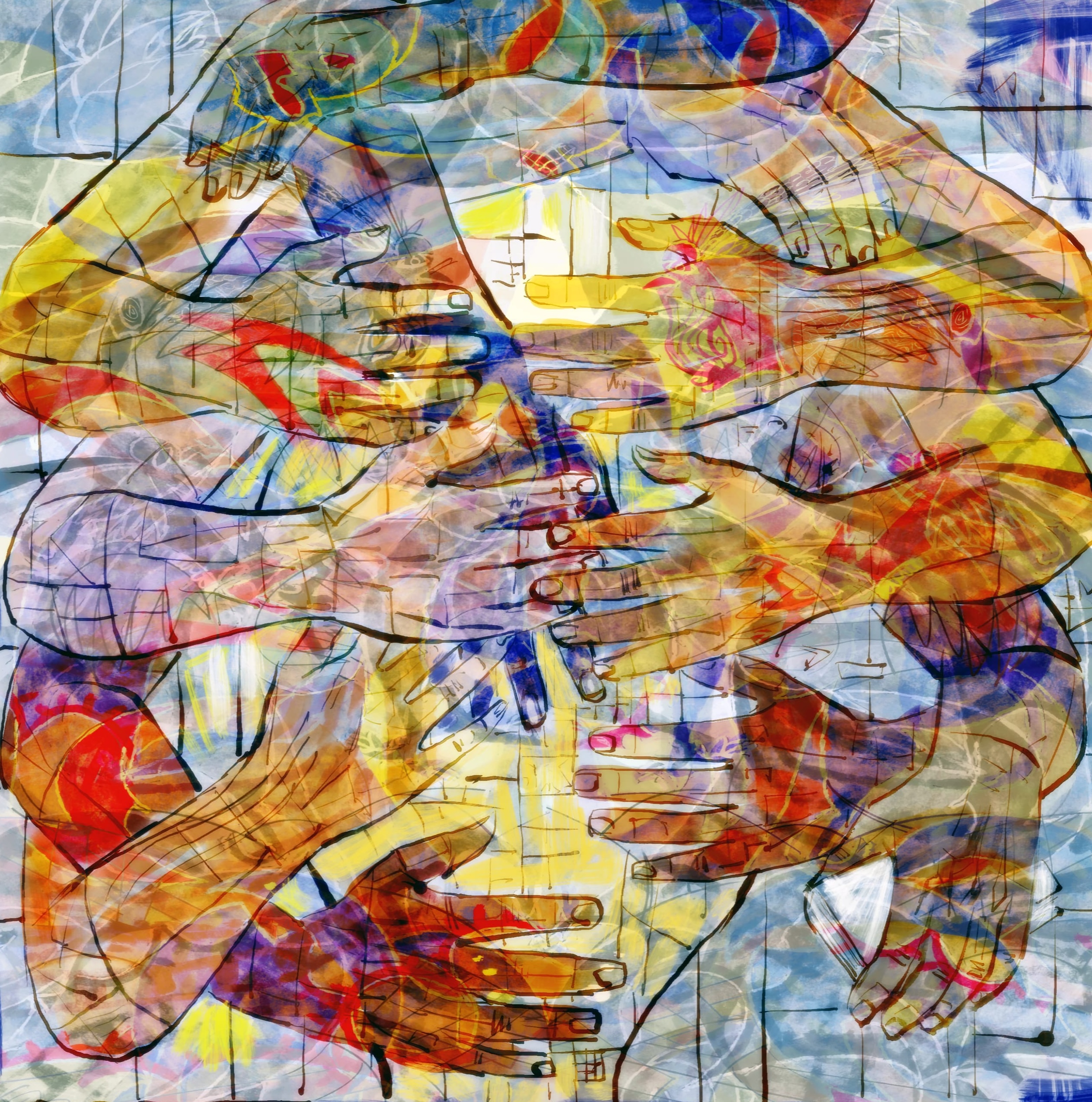
At the heart of this new season lies a powerful concept: that of the abrazo, the embrace. An artistic embrace that brings opposites into dialogue, connects forms, and opens up spaces for the flow of imagination. More than a stylistic reference, the Baroque asserts itself here as a philosophy: one of movement, contrast, and constant transformation.
This season thus juxtaposes major works from the repertoire with contemporary creations, in a fruitful tension between tradition and innovation. It affirms La Cité Bleue’s mission as a place of creation, transmission, and encounter, rooted in Geneva while remaining resolutely open to the world.
Performances of the 2026–2027 Season
With *Neverland*, starting in early September, the myth of Peter Pan plunges us into a twilight zone, where refusing to grow up becomes a prison. In this unstable universe, Sarah Nemtsov’s contemporary music and the stage design weave a haunting fable about time and metamorphosis—a threshold crossed from the very start—presented in collaboration with La Bâtie-Festival de Genève, with contributions from Theater Magdeburg, Ensemble Contrechamps, and the Grand Théâtre de Genève.
Very quickly, the season finds another anchor with Roma, the grand Baroque fresco conceived by Leonardo García-Alarcón, Cappella Mediterranea, and the Namur Chamber Choir, which takes us from the shadows of the Sistine Chapel to the dazzling light of Italian Baroque. Between sacred fervor and theatricality, the music unfolds as an aesthetic manifesto: bringing opposites into coexistence—shadow and light, tradition and living vitality.
This dialogue between art and history continues with *Musiques interdites*, a true German resistance cabaret from the interwar years, where the stage once again becomes a space of freedom in the face of oppression. Behind the irony and liveliness of the forms lies the gravity of an era when creating was already an act of courage, and the music of Jewish or “modern” composers was banned.
Centered on Les Indes galantes, the season then explores the meeting of worlds: first through the lens of cinema, which reveals the behind-the-scenes of a hybrid production at the Opéra Bastille, and then for Les Indes galantes - De la voix des âmes on stage at Concorde Espace Culture, where excerpts from Rameau’s opera come to life through music and dancers, a vibrant version where the Baroque engages in dialogue with urban cultures. Here, bodies, voices, and legacies intertwine to reinvent opera as a space of transformation. In this vein, the season doesn’t forget the youngest audiences: using pieces from Rameau’s opera, *Forêt Paisible* invites toddlers and their parents to a sensory immersion at the heart of sound, while the dance workshop *Emotion in Motion* turns movement into a shared language between children and parents. Already, the transmission of art is taking place through experience.
At the end of October, Gitanes sets the stage ablaze with contrasting passions: between Janáček and de Falla, love becomes fever, heartbreak, and incantation. This intensity is extended by Remix, where the younger generation upends the codes of the Baroque with jubilant freedom, blending styles and energies in a resolutely festive spirit.
November opens with an inner quest in *Le Chant du sabre*, a unique encounter between Noh theater and choral singing, where withdrawal becomes a path to the self—a preview of an introductory workshop on Aikido and Bokken to immerse oneself in Japanese culture.
Then, the season expands toward new horizons with a weekend dedicated to FILMAR en América Latina, a true journey through the Latin American imagination that pairs a concert with a film: from the piano recital Vuelvo al Sur, rich in nuance and rhythm, to the animated film Pachamama, preceded by a meeting with composer Pierre Hamon, all the way to Héritage(s), a vibrant celebration of Latin America’s musical roots and cultural fusions.
Two of the highlights of La Cité Bleue’s program return to the stage: with Seasons, theater, cinema, and music come together in a hybrid form to tell the story of our contemporary lives—fragmented and sensitive—while María de Buenos Aires brings the spirit of tango to life, straddling urban myth and sensual poetry, extending the experience into the body with its dance workshops at the end of the performances.
A day of tribute to Jorge Luis Borges will feature alternating presentations by Bertrand Lévy, Nicolas Ducimetière, and Leonardo García-Alarcón, concluding with the screening of a documentary.
Autumn draws to a close in a moment of contemplation with Arcadelt, an ode to the Flemish composer’s reborn beauty by Leonardo García-Alarcón, Cappella Mediterranea, and the Namur Chamber Choir, and in the discovery of an emerging talent with the Radu Lupu Prize, a suspended moment where musical youth meets the legacy of the great performers.
In the heart of winter, the season is tinged with contrasting lights: Kósmos! bridges the East and the Mediterranean in a celebration of the music of love, preceded by a Gaga dance workshop, while the festive spirit takes center stage with Christmas on Broadway, blending elegance with popular flair.
The start of 2027 continues this journey through cultures and forms: Intimate Spain blends harpsichord and flamenco in a striking chiaroscuro featuring the great dancer Israel Galván and Benjamin Alard on the harpsichord, while Stravaganza! unearths forgotten treasures of the Italian Baroque, and Carmina Latina sees Leonardo García-Alarcón further broaden the horizon between Baroque Spain and the New World, preceded by a lecture on The Spanish Baroque.
In February, dance takes over the space with Murmuration - Blue edition, a fascinating architecture of movement where the collective becomes visual expression—a reimagining of choreographer Sadeck Waff’s show, created specifically for La Cité Bleue, which has already captivated thousands of audiences worldwide with its hypnotically precise choreography.
March brings introspection and memory into dialogue: Verlaine in Prison explores confinement and poetry, with a lecture on Verlaine and Women to learn more about the poet’s life, while Le Sacre du Piano reveals the orchestral power of the instrument with Cédric Pescia, piano students and professors from the HEM, and Le Journal intime de Bernstein gives voice to the confidences of a genius through music performed by Shani Diluka and narration by Charles Berling.
Spring marks a turning point with Smile!, a recital exploring the art of smiling through music with Sabine Devieilhe and the ensemble I Giardini, in a concert that is also part of the Grand Théâtre de Genève’s program.
It is with The show must go on!, a sparkling production that looks at musical theater with humor and lucidity, that musical theater will take over La Cité Bleue: inspired by a comedy by Goldoni, Jacopo Raffaele—known by his stage name, il Baskerville—composes the music to a libretto by Aurélien Hamard-Padis and Laurent Delvert, who also directs the production. The idea is to tell the highly entertaining story of a troupe of artists who are scraping by to escape financial hardship. Hope is rekindled when a wealthy Arab businessman announces his arrival in town: perhaps he will finance a grand opera season?
The season continues in its richness: *Métamorphoses* transforms the symphony into chamber music, foreshadowing the Beethoven Cycle: to mark the 200th anniversary of Ludwig van Beethoven’s death, La Cité Bleue is dedicating two exceptional days to one of the absolute pinnacles of the repertoire: the complete cycle of his string quartets. Conceived as a true journey, this cycle invites listeners to follow the composer’s dazzling evolution, from the early quartets—still influenced by Joseph Haydn and Wolfgang Amadeus Mozart—to the late works, with their visionary audacity, where the music seems to be invented anew at every moment.
To bring this monumental work to life, several of the most acclaimed quartets of their generation—the Modigliani, Agate, Métamorphoses, Elmire, Novo, and Leonkoro Quartets—will take turns throughout the weekend to offer us a vibrant and varied interpretation of this cycle.
Commissioned to celebrate the marriage of Louis XIV, Francesco Cavalli’s *Ercole amante* affirms the power of Baroque opera in all its grandeur, remaining one of the most ambitious and spectacular operas of the 17th century. A key figure in the rediscovery of Cavalli, Leonardo García-Alarcón returns to this monumental work in concert form with the energy and sensitivity that are the hallmark of his interpretations. At the helm of Cappella Mediterranea, the Namur Chamber Choir, and the Dijon Opera Choir, surrounded by exceptional soloists, he restores this score to its full dramatic vitality and expressive richness.
The season continues with a unique sensory experience in Parfums, where music is inhaled as much as it is heard. In dialogue with the sounds, the fragrances open another path to the works, evoking memory, the imagination, and the most intimate emotions.
The musical gesture then becomes a playground with Sans les mains, a project that explores virtuosity from an unexpected angle. By shifting the boundaries, this children’s show reveals another way of experiencing music: freer, more playful, and focused on the discovery of sound.
Finally, the season’s last performances open with a deeply human reflection in *Que personne ne sache où nous sommes*, a tribute to Alma Mahler’s fin-de-siècle Vienna, before concluding with a gesture of synthesis and openness: Il pomo d’oro, which offers a performance that is both baroque and Latin American, composed by Pablo Agudo López, an artist associated with La Cité Bleue, as a reimagining inspired by Pietro Antonio Cesti’s baroque opera that embraces the fractures of history to turn them into a driving force for creation, championing the idea of a “living baroque,” infused with cultural fusion, rhythm, and invention. This final event embodies the very spirit of the season: a space where musical traditions meet, transform, and together invent a living art.
Thus takes shape a season marked by fruitful tensions: between past and present, between rootedness and cultural fusion, between intimacy and the collective. A profoundly Baroque season in which each performance, far from standing alone, is part of a single movement: that of an abrazo, an open and vibrant artistic embrace.